

Key Takeaways: Your Blueprint to Stop Overpaying
The Blueprint in Three Steps:
To stop overpaying in the current real estate sector, you must first establish a price limit with a Certified Valuation, then treat the agent's guide as marketing, and finally, only buy assets where the land value is at least 70% of the total price.
Data Beats Emotion:
The anxiety of overpaying is neutralised when you access and use recent sales data in your analysis. This protects you from emotional decisions, especially given the impact of interest rates on borrowing capacity and overall housing affordability.
Understand the Agent's Role:
A selling agent's legal duty is to the seller. Their price guide is a psychological tool, not an accurate reflection of value. Expert commentary on the sector consistently highlights this distinction.
Play #1: Your Personal Australian Property Market Analysis
The first and most critical move is to get a Certified Valuation. This isn’t an online estimate. It’s a formal, multi-page document from a licensed valuer who determines an asset’s value. They do this by analysing it against 3-5 recent and highly similar sales. This property data provides a non-negotiable walk-away price, acting as a circuit breaker against “The Winner’s Curse.” This is a common trap where the auction winner is simply the person who overvalued the residential property the most.
The Mechanics of a Valuation
This process is the cornerstone of any accurate analysis of an asset. A valuer’s assessment provides a factual baseline, essential before you even consider applying for a loan or mortgage. It’s the ultimate reality check in a climate often fuelled by hype. To find the true median value, you must use objective facts, not emotion.
- The Latest Data: A valuer uses sales from the last 90-180 days for dwellings with near-identical land size, bedroom count, and condition, reflecting the most current trends in Australia.
- The Adjustments: They make small, mathematical adjustments for minor differences. For example, they might add value for a better kitchen or subtract for being on a busier road. This detailed process ensures true comparability.
- The Result: The final number is an objective, evidence-backed assessment of the home’s value, giving you clarity on real residential property prices, free from market hype and unreliable forecasts.
This disciplined approach ensures your financial decisions are sound, safeguarding your capital for genuine opportunities. For discerning individuals, having this clarity is non-negotiable, as it dictates every subsequent move from your offer strategy to your final bidding limit. It provides the confidence to act decisively when the right opportunity arises.
What if I can't get a formal valuation in time?
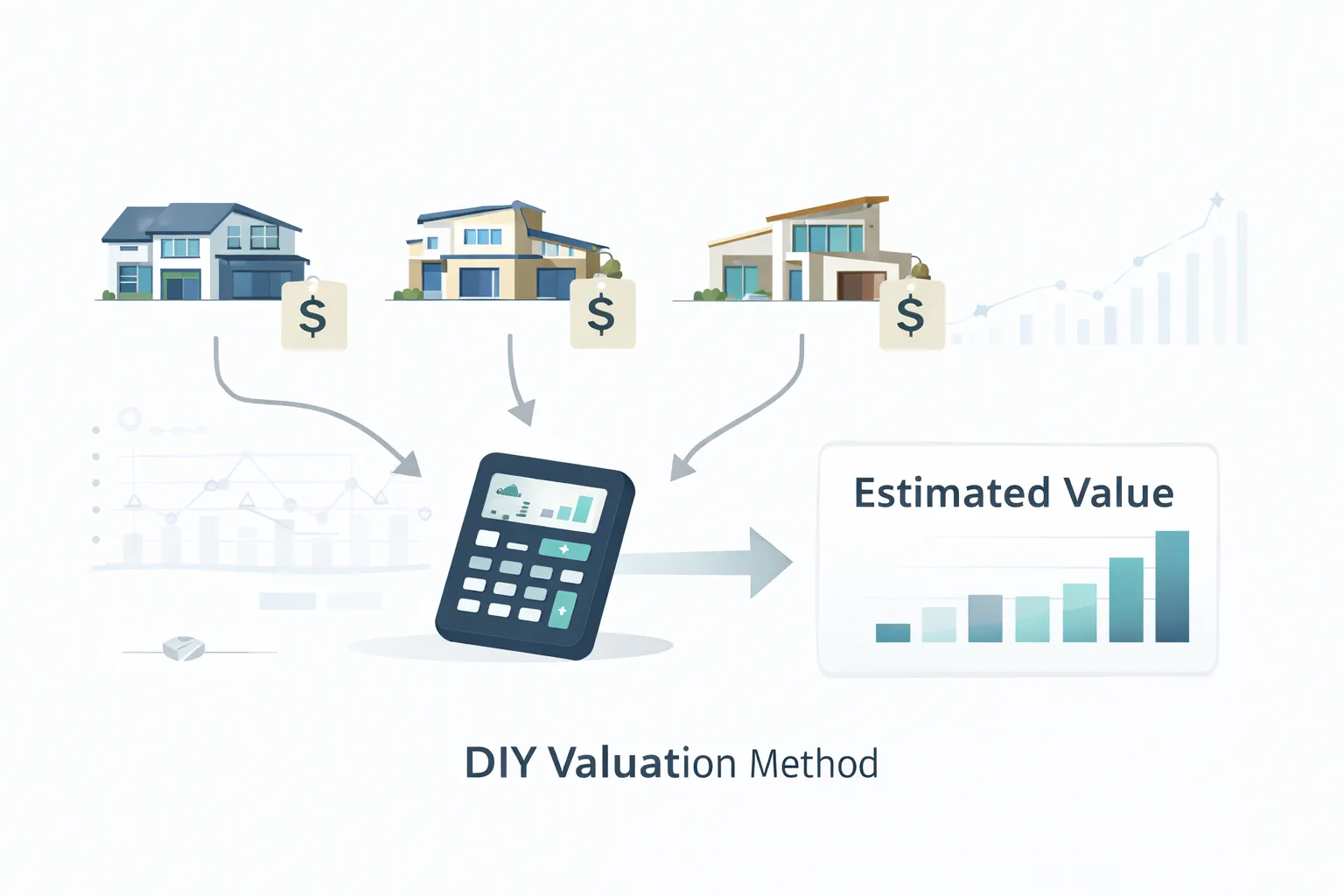
You can create a DIY version. Go to the ‘Sold’ section on realestate.com.au or Domain and search for three homes that are as close as possible to your target dwelling that have sold in the last 90 days in the same locale. Average their sale prices to get a rough median house price for that specific pocket. While less accurate, it provides a crucial data-based anchor and a much better guide than an agent’s quote. It gives you a starting point for analysing house prices.
Ready to Master the Market with Professional Property Analysis?
Partner with NI Advocacy for expert data-driven insights, off-market opportunities, and the strategic edge you need to win.
Play #2: Decoding Agent Tactics in the Current Real Estate Climate
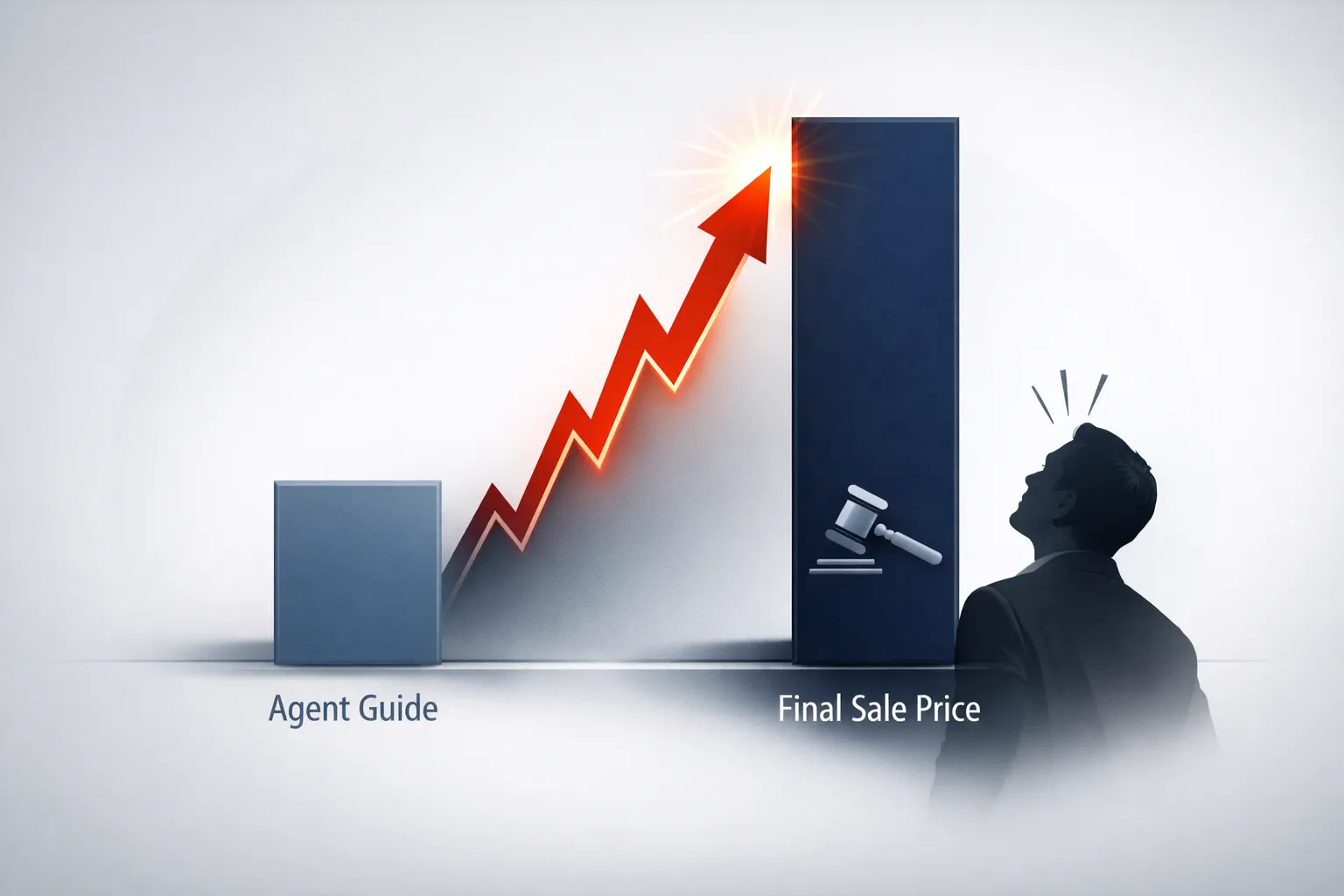
With your data-backed price established, you can now assess the agent’s price guide. It’s essential to understand that the agent’s guide is a psychological tool, not an accurate valuation. Their legal loyalty is to the seller, and their job is to generate the highest possible sale. The quoted range uses a principle called Anchoring Bias to attract a larger pool of bidders and make the final price seem reasonable, even if it exceeds the dwelling’s true worth. This can cause a sharp rise in the final sale figure during an auction.
"Is the selling agent tricking me?"
They aren’t necessarily tricking you. They’re doing their job for their client. The power shift happens when you realise their price guide is marketing material. The only source of truth is your own analysis based on recent, comparable sales data. If your data says a home is worth $1M, and the guide says $1.1M, you trust your data, period.
But what if my data-backed offer is too low and I miss out?
This is a critical mindset shift. Allowing a dwelling to be sold to someone else because the bidding became irrational is a strategic victory. It means you protected your capital for the right opportunity, rather than overpaying for the wrong one. You’ve successfully avoided a six-figure mistake, and frankly, that’s what we call kicking goals.
Looking To Access Off-Market Properties?
Overwhelmed by comparing sales data? We can run a professional analysis for you, removing the guesswork and providing a clear, evidence-backed purchase price.
Play #3: Confirming You Are Buying a High-Growth Asset
Knowing your price is one thing. Knowing you’re buying a quality asset is another. A key part of any sound national housing market forecast is the long-term performance of quality holdings. True long-term capital growth comes from scarcity, and in the Australian property landscape, only the land is truly scarce. This principle applies everywhere, whether you’re assessing capital city markets or regional growth corridors. To measure scarcity, professionals use the Land-to-Asset Ratio.

This is a simple calculation to see how much of your money is buying the appreciating land versus the depreciating building. As a rule, you should target holdings where the land value makes up at least 70% of the total price. This Land-to-Asset Ratio is a core metric our team uses to filter out poor-quality assets before they even reach a client’s shortlist, ensuring their capital is allocated to assets that are positioned for maximum growth and solid property investments.
The Mechanics of the Calculation
Ask the agent for the Section 32 or Vendor’s Statement, which contains the council rates notice. On that notice, look for the Site Value. Divide that number by your intended purchase price. For example, if the Site Value is $700k and your purchase price is $1M, you have a 70% ratio. This means that for every dollar you spend, 70 cents buys the part of the asset that grows in value.
What about apartments where this doesn't work?
With units, the strategy is to seek scarcity in other ways. This detailed analysis is crucial where lifestyle and amenity drive value. Understanding rental market performance and potential yields is also key for investors. Expert commentary often highlights these features:
- A small boutique block: An apartment in a block of 8 is far scarcer than one in a block of 300, a key factor where supply is constrained.
- A unique floor plan: An apartment with an oversized layout or a rare third bedroom will always be in demand.
- Protected views: A view over a park or water that can never be built out is a scarce and valuable feature.

An advisor coordinates independent building and pest inspections to ensure the holding is physically sound. This due diligence also includes assessing local building activity that might impact future value. Our team operates on a strict ‘no major defect’ mandate, meticulously reviewing the Section 32 alongside these checks to ensure clients only ever see safe investments.
Your Blueprint for Control in Any Capital City
This three-play blueprint is designed to shift you from being a passive participant to an informed purchaser in full control. By grounding your decisions in objective data, from valuation documents to land-to-asset ratios, you remove the emotion and anxiety that lead to costly errors. This framework doesn’t just help you avoid overpaying. It ensures the asset you buy is a high-quality residential dwelling positioned for your family’s financial future, with your wealth soaring above targets.
FAQs On Analysing Real Estate in Australia
No, the selling agent's price guide isn't a reliable indicator of a dwelling's true value. It should be treated as a marketing tool designed to attract as many potential interested parties as possible. The agent has a legal and financial obligation to the seller, not the buyer. The tradeoff is clear: the agent's guide aims to create emotional competition, while your data analysis aims to establish the objective, logical price. Relying on the guide is a primary cause of overpaying.
A Certified Valuation protects you by providing a non-negotiable, evidence-backed walk-away price before you enter a high-pressure auction or negotiation. This valuation, conducted by a licensed professional, is based solely on recent comparable sales data and a physical inspection. It replaces emotional guesswork with a hard number based on the median value of similar homes, creating a financial circuit breaker that ensures you don't get caught in bidding wars and pay more than an asset is worth.
The Land-to-Asset Ratio is critical because land is the only scarce component of a holding that appreciates significantly over time. Buildings, in contrast, depreciate and require costly maintenance. If you're shopping for a high-growth investment, targeting a home with a high Land-to-Asset Ratio, ideally over 70%, ensures most of your capital is invested in the appreciating land. This strategic choice prioritises long-term wealth creation over the short-term appeal of a new building on a small block of land.
The best way to analyse current trends is to focus on micro-level data rather than broad media headlines. This involves tracking the sold prices of homes directly comparable to your target in the last 90 days within the same area. This specific, localised data provides a far more accurate picture of value than a national forecast. Combining this with data on local auction clearance rates and average days on market gives you a granular, real-world understanding of the specific segment you're buying in.
Housing supply is a fundamental driver of price. When the supply of available homes for sale is low and demand is high, competition increases, pushing prices up. Conversely, an oversupply can lead to a softer market in which purchasers have greater negotiating power. Understanding the supply dynamics in your target area, including the pipeline of new buildings and development, is critical for making an informed purchase decision and assessing future growth prospects.

Ni Advocacy
Melbourne Buyers Agency
Ready to Secure Your Future with a High-Growth Asset?
Partner with NI Advocacy for reliable market analysis, strong growth potential ($100k – $300k+ in equity gains), and the support you need to succeed as a property owner.