

Key Takeaways On How to Value an Asset
The Core Answer
An asset's true worth is found by using a three-part framework. These methods of property valuation include analysing comparable sales, calculating potential income, and assessing the asset's raw cost.
The Market Method
Find at least three similar homes sold in the same area within the last 90 days. This provides the most accurate benchmark of current market value, which is a key factor valuers look for.
The Income Method
For investments, calculate the Capitalisation Rate by dividing the annual rent by the acquisition cost. This is a critical metric for comparing the financial performance of different assets.
The Cost Method
Calculate the site's raw value, then add the cost to rebuild the house today, while subtracting for wear and tear. This ensures you aren't overpaying for the physical structure itself.
The Final Step
Use this data to set a hard "walk-away figure" before you negotiate. This is your most powerful defence against making an emotional and costly mistake.
The 3 Core Methods for Determining Value
An asset’s real market value isn’t a single number provided by a seller. It’s a logical conclusion you reach by looking at the asset from three distinct angles. This is how professional property valuations are conducted.
-
Method 1: The Market Approach (Comparable Sales) A property valuer will go to the "Sold" section on a data platform such as CoreLogic or on public sites such as Domain. They find at least three homes that are highly comparable to the target asset, such as those with a similar site size, bedroom count, and condition, which have sold within the last 90 days. This is one of the main things valuers look for because this recent data is what banks use to confirm the market value.
-
Method 2: The Income Approach (For Investments) For an investment property, its dollar value is tied to its performance. You measure this by calculating its Capitalisation Rate. The formula is Total Annual Rent divided by Acquisition Cost equals the Capitalisation Rate. For every $1,000,000 you spend, a 4% rate means you receive $40,000 in gross rent per year. This allows you to logically compare the financial returns of different real estate assets.
-
Method 3: The Cost Approach (Physical Value) This method breaks the asset into two parts. First, you find the site value, which is often listed as the "Site Value" on the council rates notice. Second, this involves estimating the building's replacement cost from a builder or quantity surveyor and subtracting an amount for its age and wear, known as depreciation. This is another key factor that valuers look for.
Understanding a Bank's Figure And Market Value to Avoid Overpaying
The fear of overpaying is often realised at auction due to a phenomenon called the “Winner’s Curse.” It states that the winner is often the biggest financial loser because their emotional bid created a market value far higher than the property’s data-driven bank valuation.
Why this happens: It's crucial to understand how banks use their valuations. A bank's calculation is a conservative risk check for the lender, whereas market value is what a buyer is willing to pay. Remember, a lender will do their own valuation regardless of other reports. At auction, the market value can soar past the lender's valuation. An independent check is your only defence.
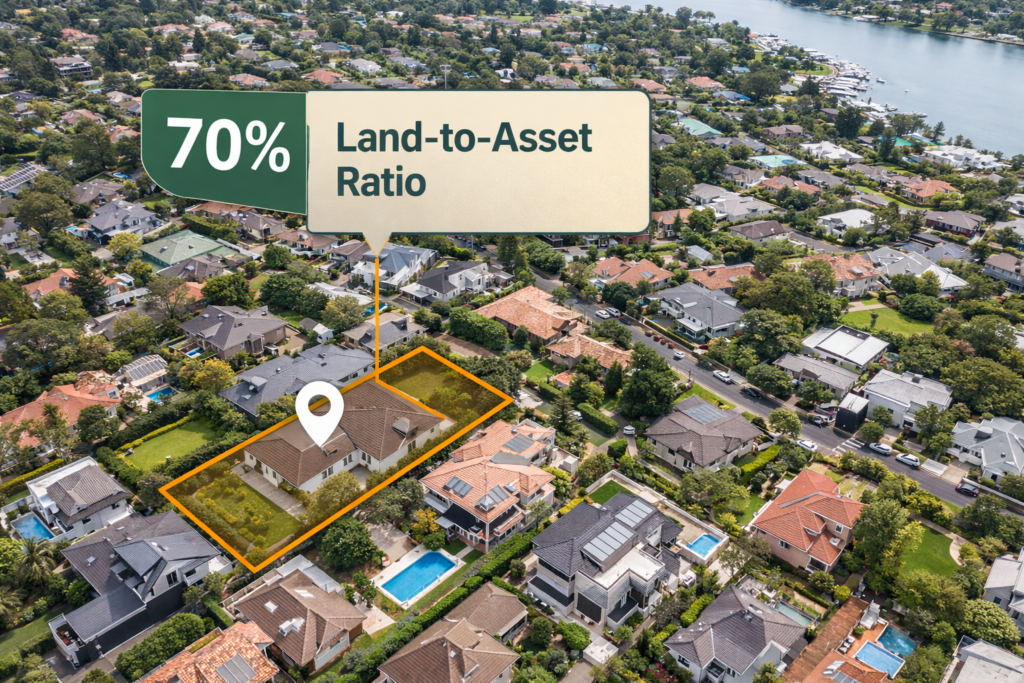
The professional's rule: The structure is a depreciating liability while the site is the appreciating asset. For this reason, my recommendation is to target only assets where the site value accounts for at least 70% of the total cost. A tired house on a priceless block will almost always outperform a new apartment over the long term. Now that's what I call kicking goals.

Is the Agent Tricking Me?
A selling agent has a legal duty to the seller and not to you. They often use a range of prices, like “$1.1M to $1.2M,” to exploit a psychological trick called Anchoring Bias. This means you rely too heavily on the first piece of information offered. The higher number gets stuck in your head and subconsciously pulls your offer up.
The pro move: Never walk into a negotiation without a hard “walk-away figure” written on a piece of paper. This number must be the absolute maximum you calculated using the valuation methods above. It acts as your logical shield against emotional decisions.
Need help calculating your walk-away figure?
Use a Certified Practising Valuer to find an asset’s true market value and enter negotiations with total confidence.
How a Full Valuation Gives You Real Negotiating Power
When you’ve got a formal report, the guessing game ends. Unlike a quick desktop check that relies solely on data, a full analysis gives you an ironclad and evidence-based figure to negotiate with. The final output of this process is critical, and it’s important to understand what a detailed report tells you before you commit.
The Consequence of Guessing:
Buyers who enter negotiations without objective data risk overpaying by a significant margin. A small miscalculation on a multi-million-dollar asset can easily result in a six-figure mistake. Knowing your property’s worth is crucial.
Having an independent analysis is what separates a hopeful buyer from a strategic one. A buyer’s agent uses this data to build a negotiation strategy based on facts instead of feelings. Our team, for example, presents this certified data directly to the selling agent, immediately shifting the dynamic from hype to hard evidence. We’re talking soaring above the competition.
Your Game Plan to Buy Smart
Buying an asset successfully isn’t about luck. It’s about having a logical system. Here is the exact approach to ensure your next acquisition is a sound financial decision.
-
Do your own research first You can get a free valuation estimate yourself using the three methods above before engaging a professional.
-
Prioritise site value Aim for a 70%+ site-to-asset ratio to secure a high-growth asset. This is a crucial factor valuers look for.
-
Establish your walk-away figure based on this hard data before you ever make an offer.
This is the logical framework that protects buyers and helps them build wealth. It provides a professional opinion in a market that often feels uncertain.
Frequently Asked Questions About Property Valuation
In Australia, there are three primary methods used for a property valuation. The first is the Market Approach, which determines value by comparing the asset to at least three recently sold similar homes. The second is the Income Approach, used for investments, which calculates value based on its potential rental income via a Capitalisation Rate. The third is the Cost Approach, which assesses the combined value of the site and the cost to replace the building, minus depreciation.
A bank's figure is a conservative risk check conducted for a lender to secure a home loan, and it often comes in lower than the market value. In contrast, market value is the amount that a willing buyer is prepared to pay for an asset on the open market. The key tradeoff is risk versus opportunity. The bank's figure is for loan security, while the market value reflects what your property could sell for under current conditions.
A property valuer analyses several key attributes to determine a property's worth. The most important factors include the property location, site size, and zoning regulations. They also assess the building's size, age, condition, and overall construction quality. Finally, valuers rely heavily on direct comparisons with recent, verified sales of similar homes in the immediate vicinity, as this provides a clear benchmark for their current market value.
Yes, they're different in scope and accuracy. A desktop check is an automated assessment that uses data and algorithms without a physical inspection, making it faster but less precise. A full valuation, conducted by a Certified Practicing Valuer, includes a thorough internal and external inspection of the asset. This provides a more reliable and defensible figure, which is crucial for high-stakes negotiations or financial reporting.
You can get a free estimate of your property's worth through several methods. Many real estate websites offer automated online tools that provide an instant estimate based on local data. Alternatively, you can request a free market appraisal from a local real estate agent. It's important to note that both options provide an estimate or "appraisal" for marketing purposes, not a certified valuation, which is a legally binding document required by banks for mortgage lending.
Ni Advocacy
Melbourne Buyers Agency
Want to execute this game plan with an expert?
Let’s combine a professional valuation with Ni Advocacy to secure your perfect high-growth asset together.