

Key Takeaways: 5 Core Investment Strategies
Blue-Chip Growth
This strategy involves buying in top-tier suburbs with consistent buyer demand. The key is finding properties where the land value makes up over 65% of the total price to anchor the investment's growth.
Positive Cash Flow
This involves purchasing assets in areas with very low rental vacancy rates. The goal is to generate a net rental return of over 3.5%, a common feature of the best suburbs in Australia with high rental yields.
Manufactured Equity
This strategy focuses on identifying undervalued property markets by finding older properties where a smart renovation in key areas can deliver a 2:1 return on your spending.
De-Risked Development
This involves identifying land with zoning that allows for development and completing a detailed financial check. This is a crucial first step for anyone new to property development.
Off-Market Access
This strategy focuses on building relationships with agents to access properties not listed online, which often helps you secure a 5-10% discount compared to its value.
The 5 Core Strategies for Property Investing
Lasting wealth is rarely built by speculating. It comes from a clear plan that uses one or more of these five industry-standard strategies to find sound property purchases.
Engaging a property investment buyer’s agent can provide the expert guidance needed to navigate this process.
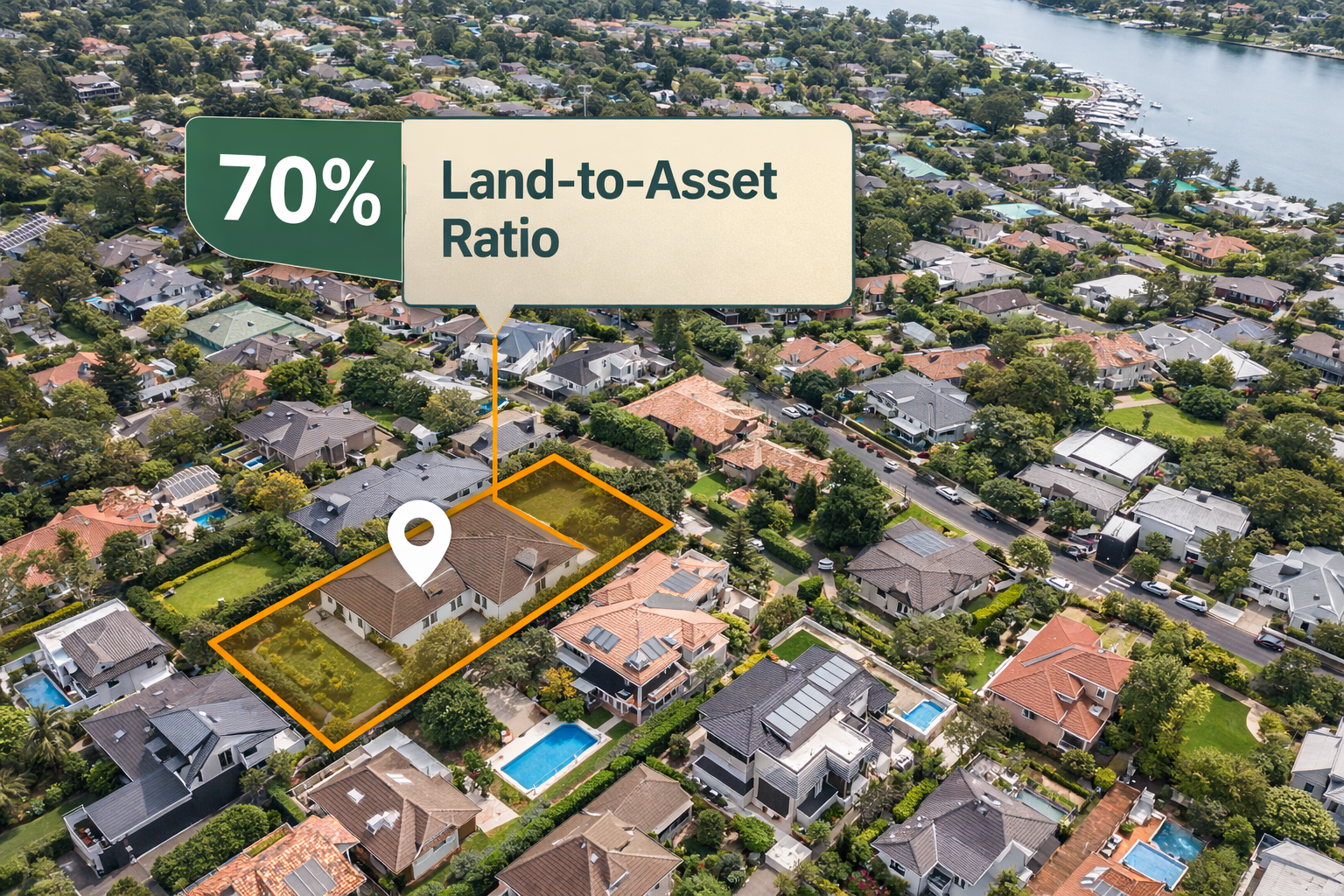
1. Blue-Chip Capital Growth for Long-Term Wealth
The goal is to find properties with a land-to-asset ratio over 65%. This is calculated by analysing council valuations and recent land sales in the area to determine what the block of land is worth on its own.
Why this matters: Land is a finite resource where prices have risen over 500% since 2000, and it generally increases in value. The building on it depreciates over time. A high land ratio anchors your purchase to the component that reliably grows.

2. High Yield Cash Flow To Create Immediate Income
Amateurs often focus on the advertised “gross” yield. A professional calculates the true net yield: the income left after all expenses are paid. To be safe, this figure should be 3.5% or more.
Finding these opportunities in the suburbs with high rental yields requires deep research into local conditions where vacancy rates are below 1.5%, as the current rental crisis creates unique opportunities for investors. Finding a good property manager is also critical to making this plan work.

3. Value-Add Renovation for Equity Creation
This strategy follows a strict 2:1 ‘cost-to-value’ rule. A smart $30,000 spend in a kitchen and bathroom for an older home should add at least $60,000 to its valuation, a return supported by data showing a 60-80% return on investment for key renovations in Victoria.
This method is a powerful way of identifying undervalued property markets, as it focuses on a property’s potential rather than its current state.

4. Small-Scale Development for Significant Profit
This must be treated like a business. It involves checking official resources like the Victorian Department of Transport and Planning schemes, which is a key part of the journey for a development site buyer’s agent. You’ll then run a detailed financial plan called a feasibility study.
This includes construction costs and taxes to ensure the project can deliver a minimum 20% profit on all costs, a strategy often employed by build-to-rent developers.

5. Off-Market Advantage for Buying Without Competition
The best deals are often made privately. Accessing this “wholesale” network requires building strong relationships with local selling agents and is key to identifying undervalued property markets, especially since off-market sales represent 20-30% of Victorian transactions.
Our team, for instance, is often among the first to be called for off-market sales because selling agents know we can facilitate a clean, professional transaction.
Need help with Your Investment Portfolio?
Let’s create a clear plan for your financial future.
A 5-Point Checklist for Your Next Investment Property
To help you put everything into practice, here’s the simple blueprint to follow when assessing a potential investment. A regular property portfolio review can also help refine your approach over time.
-
Prioritise the Land Remember, you're buying the land, which is a limited resource, not just the building, which loses value over time. Aim for a land value that's over 65% of the total price.
-
Focus on Net Rental Yield Don't get distracted by the advertised rental return. The only number that matters is the cash left in your pocket after all expenses are paid.
-
Create Your Own Growth Don't just wait for prices to rise. Look for opportunities to add value yourself through smart renovations where every dollar you spend aims to return two in value.
-
De-Risk Your Development Before you buy land for a project, understand the local planning rules. Build a solid financial plan that targets at least a 20% profit.
-
Look Beyond Public Listings The best deals are often done privately. Building good relationships with industry professionals is the key to finding these hidden gems and uncovering the best opportunities for investment in Australia.
Common Questions from Property Investors
Using a Certified Practising Valuer provides a critical financial advantage by establishing a property's true value before you buy. A valuer accredited by the Australian Property Institute and uses formal, data-driven methods based on comparable sales, giving you clarity on fair property prices and the local median price.
This is a key difference from an agent's appraisal, which is a marketing estimate. The primary tradeoff is paying an upfront fee for the valuation versus the much larger financial downside of overpaying for an asset based on an inflated price guide.
Off-market properties are found primarily through the established professional networks of buyers agents who've strong relationships with selling agents. Selling agents often present properties privately to a trusted buyer's agent to avoid marketing costs and to secure a quick, reliable sale with a pre-qualified buyer.
For a purchaser, engaging a buyer's agent with access to these opportunities creates a significant advantage over buyers who only search public websites like Domain or REA Group. The trade-off is the professional fee, which is exchanged for access to less competitive deals.
Neither is definitively better: the choice between commercial and residential property depends on a buyer's goals for cash flow, appreciation, and comfort with economic fluctuations. It's also vital to understand the different tax implications, as the ATO offers detailed guides on rental expenses for residential properties versus commercial ones. The decision requires a clear comparison of their distinct features.
For those seeking stable growth and simplicity
- Residential Property is often the preferred choice. It's generally easier to secure loans for, simpler to understand for beginners, and benefits from more consistent capital growth driven by population demand. However, it typically offers a lower rental return and shorter lease terms.
For those seeking higher income and longer-term occupants
- A commercial property agent can be a strong option. It usually provides higher rental yields and longer leases, often 3–5+ years, with occupants frequently responsible for outgoings like rates and maintenance. The main trade-offs are higher sensitivity to economic downturns, longer potential vacancy periods, and the need for larger initial capital.
No, a profitable renovation is not determined by timing the economic cycle but by a strict financial calculation. The primary risk, known as ‘over-capitalising’, is spending more on improvements than the value they add. This is managed by focusing on a 'cost-to-value' ratio, where every dollar spent on a renovation is engineered to add at least two dollars to the property's final valuation, soaring above your targets.
This is calculated by analysing sales data from sources like CoreLogic for similar renovated versus unrenovated homes in the same area, ensuring the decision is based on verifiable data, not speculation.
Ni Advocacy
Melbourne Buyers Agency
Want to Build Your Portfolio?
Let’s create a clear plan for your financial future.