

Key Takeaways: High-Growth Areas for 2026
The Forecast
The top-performing areas for 2026 are expected to be in three key corridors: the Suburban Rail Loop East, the Inner West, and Bayside, as these locations meet the non-negotiable criteria for sustainable growth.
The Growth Formula
Real value growth isn't an accident. It's the result of measurable forces such as major government investment, protective council zoning that limits new housing supply, and the influx of high-income households driven by Victoria's population surpassing 7 million.
The Investor's Safety Net
Your profits are secured when you buy. To manage risk, you'll need to purchase at or below a property's certified True Market Value, a figure determined by a formal, evidence-based valuation process.
The Mechanics of an Accurate Property Forecast
Professional forecasting relies on identifying specific, measurable forces that predictably drive property values. Any investment-grade asset’s got to be supported by the following three pillars. These market trends are what separate a hopeful gamble from a calculated investment that’ll deliver results in 2026.

Pillar 1: Follow Government Infrastructure Spending
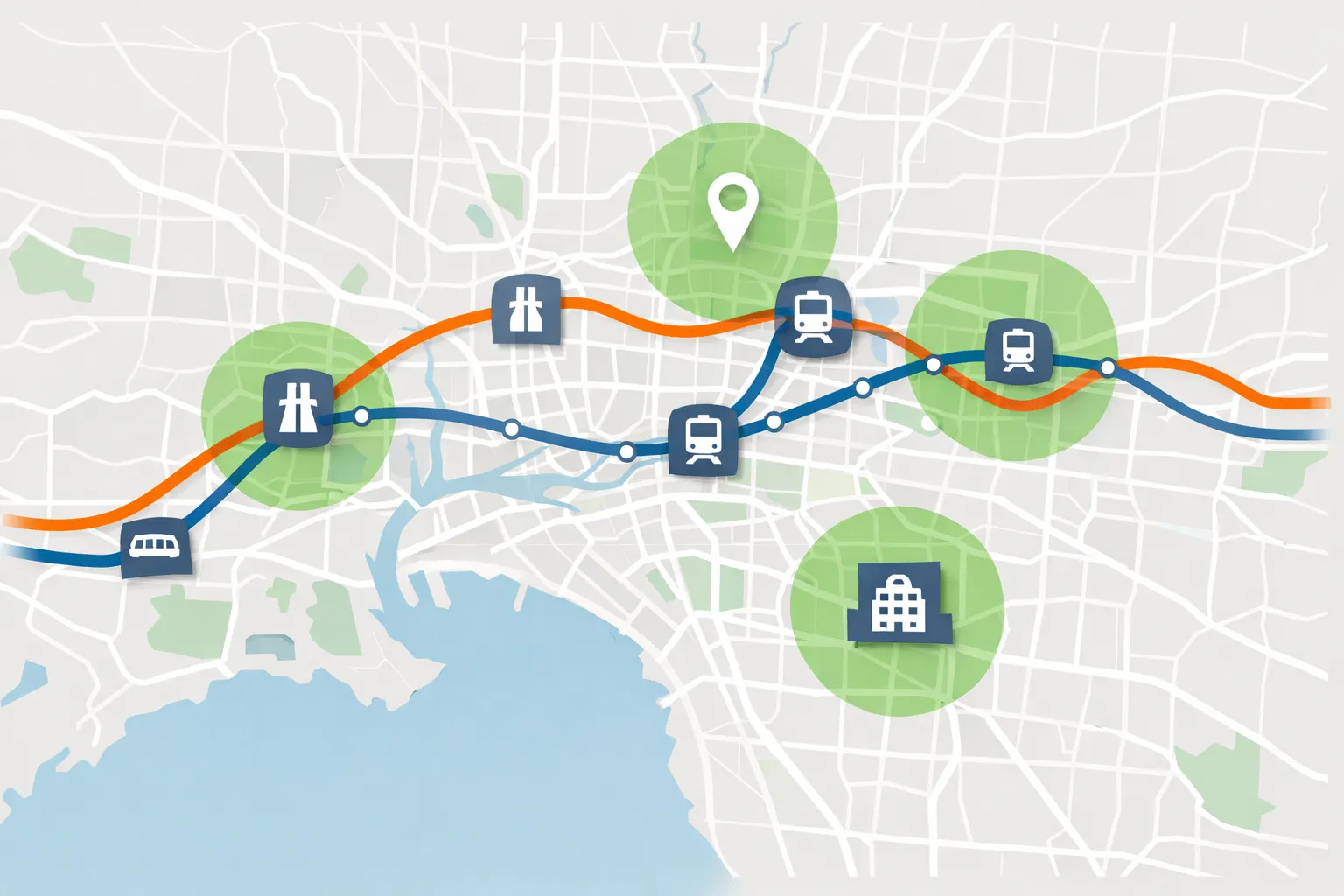
What this is: tracking major, funded government projects like the Suburban Rail Loop and the Metro Tunnel. The key is to analyse where billions are being spent to create new economic hubs, a factor that heavily influences growth predictions.
How it works: New train stations and upgraded amenities make a location fundamentally more desirable. This increased demand forces house prices to rise over the long term, creating a solid foundation for capital appreciation and a strong rental return.
Pillar 2: Identify Genuine Land Scarcity

With your assets legally protected, you must structure your finances to be both safe and efficient for growth. Let’s get your finances kicking goals. This involves two non-negotiable rules for your property loan.
What this is: This is a measure of how difficult it is to build new housing, which you’ll identify by checking a council’s planning scheme for zones labelled Neighbourhood Residential Zone or Heritage Overlay.
How it works: These rules strictly limit high-density development, which is why the forecast for inner-suburb units will likely be weaker due to oversupply. This scarcity protects your investment from being devalued. This trend is amplified by renewed investor confidence, with lending growth in this sector now outpacing that of owner-occupiers.
Pillar 3: Pinpoint the High-Income Ripple Effect

What this is: This is the demographic shift of high-income households moving into an area. You’ll spot this trend using the free Data by Region tool on the Australian Bureau of Statistics website.
How it works: A higher-income population brings more local spending, leading to better amenities and lifestyle appeal. A valuer’s analysis always cross-references this data to verify that a suburb’s economic foundation can support higher future property values.
Need Help Applying This Framework?
A forecast identifies potential, but a tailored strategy secures it. Our expertise as Certified Valuers turns this market data into a precise acquisition plan built for your success.
Top Performing Growth Corridors to Watch
Applying that three-pillar framework and referencing the official Plan Melbourne 2017-2050 framework, the following corridors are structurally positioned for strong performance. While areas showing northern suburbs growth potential are emerging, this forecast for 2026 focuses on the three corridors with the most robust, data-backed indicators for sustained growth.
Growth Corridor
The Suburban Rail Loop East Corridor
Primary Growth Driver
The new Suburban Rail Loop East underpins positive growth predictions by drastically cutting commute times.
Example Locations
Cheltenham, Clayton, Box Hill, Burwood.
Target Asset Type
Established houses on land parcels over 600 square metres, located within walking distance of the new station precincts.
Growth Corridor
The Inner West Renewal
Primary Growth Driver
The Metro Tunnel project and ongoing movement of high-income professionals continue to drive renewal.
Example Locations
Footscray, Seddon, Newport, Williamstown.
Target Asset Type
Renovated period homes or older properties with clear potential for value-add improvements. Demand remains high.
Growth Corridor
The Bayside Blue-Chip
Primary Growth Driver
Extreme land scarcity combined with persistent demand from affluent families ensures a strong outlook.
Example Locations
Brighton, Sandringham, Black Rock, Beaumaris.
Target Asset Type
A-grade family homes are often transacted off-market to avoid intense public competition.
How to Manage Risk in the Current Housing Market
Overpaying’s the single biggest financial risk in any market. With PropTrack data showing Melbourne’s median house price is around $1.012 million, it’s clear that an agent’s advertised price is a marketing figure, not an objective measure of worth. To protect your capital, you’ll need to understand a property’s certified market value.
This isn’t guesswork. It’s a formal, evidence-based process. As a Certified Practising Valuer, I prepare reports for clients that adhere to strict Australian Property Institute professional valuation standards. The valuation involves a technical analysis of land-to-asset ratios, zoning, structural integrity, and comparable sales, resulting in a non-negotiable price ceiling. The final amount you’ll pay will be informed by this data, not by emotion.
Knowing this number before you’ll make an offer is the only way to ensure your profit’s secured on the day you buy. It’s the most effective risk management tool an investor’s got, providing clarity and confidence to make smart, strategic decisions.
A 4-Step Action Plan for Smart Investing
This is the exact operational checklist used to apply the framework. It turns theory into a practical, step-by-step process for any serious investor or home buyer looking to make a purchase this year.

Step 1: Map the Infrastructure Spending
Action: Go to the Victoria's Big Build website. Study the official maps and project timelines to identify properties within an 800-metre radius of a future station.
Step 2: Filter Your Search by Land Scarcity
Action: Visit the relevant local council's website. Exclude any areas zoned for high-density development and focus on those with Neighbourhood Residential Zone or Heritage Overlay protections.
Step 3: Confirm the Area's Economic Strength
Action: Use the free Data by Region tool on the Australian Bureau of Statistics website. Verify that the median household income exceeds the metropolitan average, confirming that residents can afford higher costs in the future.
Step 4: Execute Your Purchase with a Formal Valuation
Action: Before making an offer, engage a Certified Practising Valuer to determine the property's True Market Value. This provides a firm price limit and is the critical final step to prevent overpaying.

Frequently Asked Questions About the 2026 Property Forecast
The top-performing locations for 2026 are projected to be in three key growth corridors. For investors targeting infrastructure-led growth, areas along the Suburban Rail Loop East Corridor, such as Cheltenham and Box Hill, are strong candidates. For those seeking character, Inner West areas such as Seddon and Newport show strong potential. Lastly, for purchasers prioritising stability, Bayside locations such as Brighton and Sandringham are expected to remain top performers.
Yes, the Bayside outlook remains exceptionally strong for 2026. Its value is driven by extreme land scarcity and consistent high demand from affluent families. This, combined with a historically tight rental market indicated by low vacancy rates, creates powerful stability that's less susceptible to broader fluctuations.
The positive growth predictions for eastern suburbs are primarily driven by the multi-billion-dollar Suburban Rail Loop project. This major infrastructure investment is set to create new economic hubs and drastically reduce commute times, making places like Burwood and Clayton more accessible and desirable, underpinning the forecast for strong capital growth.
For investors focused on capital growth in 2026, houses with significant land components in areas with land scarcity are generally a better choice than apartments. Houses in established locations benefit from a limited supply, which drives value. In contrast, the forecast for many inner-area units is weaker due to the ongoing development of new high-rise buildings, which creates an oversupply that can suppress property value growth.
A great buyer’s agent combines market access with expert negotiation to secure the right property at the best price while saving you time and stress.
Ni Advocacy
Melbourne Buyers Agency
Ready to turn this forecast into your advantage?
A complimentary strategy session is the next step to building a precise, data-driven acquisition plan.