

Key Takeaways for Your Interstate Buying Plan
The 4-Step Playbook
The safest way to buy interstate is to first set a data-driven price limit, access off-market real estate, conduct on-the-ground forensic checks, and secure unconditional finance to move faster than other buyers.
The Core Problem It Solves
Purchasing remotely leaves you vulnerable to overpaying and missing hidden property defects due to a lack of local knowledge.
How It Protects You
This process removes guesswork by using certified valuations, uncovers costly issues with professional due diligence, and gives you a speed advantage through financial preparation.
The Biggest Unspoken Fear
The selling representative's legal loyalty is to the seller. A professional buyer's agent is legally bound to act only in your best interest to protect you throughout the transaction.
Step 1: Analyse the Property Market and Set Your Price
Before you even look at an investment asset, you must establish a firm price limit. The only objective way to do this is with a formal valuation from the Australian Property Institute. This is the most important step to prevent overpaying, as emotional premiums in Melbourne’s prestige market can add 5-10% to prices without one.
A Certified Practising Valuer, such as our founder, Kevin Ni (License No. 105017), performs a technical analysis using professional databases to identify 3-5 hyper-relevant comparable holdings. These are assets of nearly identical land size and condition that have sold within the last 90 days. By adjusting for small differences, they’ll calculate a precise and evidence-based market value.
A vendor’s price guide is simply a marketing tool. A formal valuation is a legally recognised assessment of worth. Anchoring your budget to this hard data gives you a powerful defence against auction emotion. It’s a critical step before organising any loans.

Step 2: Access the Hidden Off-Market Property Network
A significant portion of Melbourne’s best real estate is sold privately. For prestige properties over $3M, as many as 30% of sales are conducted off-market for privacy reasons. Relying only on public listings means you’re competing for a fraction of the available investment properties.
Top-selling agents maintain relationships with trusted buyer’s agents. They’ll present high-quality listings to this professional network first. Through these relationships, we provide access to over 2,000 off-market properties across Australia at any given time. A buyer’s representative brings qualified and financially ready clients, creating an efficient and certain sale for the vendor.
Working with a professional who has this network access gives you a critical advantage. You’ll see opportunities the public never will with far less competition. It turns a frustrating search into a targeted and efficient process. We’re used to kicking goals from across the country.

Feeling overwhelmed by the due diligence process?
An expert can manage these checks for you to ensure nothing is missed.
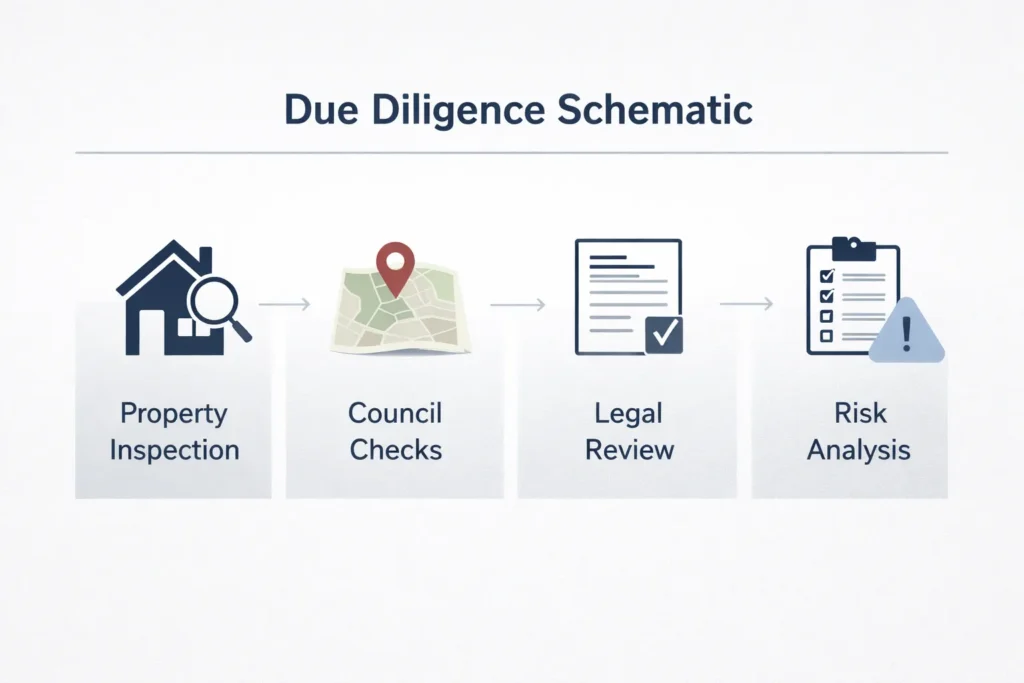
Step 3: Conduct Forensic On-Ground Due Diligence
This is the most critical step for an interstate buyer to mitigate the risks of buying sight unseen. Once you identify a target asset, you must investigate it for any costly or hidden defects. A standard building and pest report isn’t enough.
A forensic due diligence process involves a professional physically attending the holding and cross-referencing it with council data. Understanding different state laws is essential here. They’ll check for risks like Heritage Overlays that restrict renovations or Special Building Overlays that indicate flood risk. Our team cross-references these checks against the vendor’s Section 32 legal disclosure to ensure there are no hidden issues.
This process finds major financial risks that a seller isn’t obligated to disclose. An unknown heritage overlay could prevent your dream renovation. This on-the-ground check ensures the asset is a safe investment before you commit.
Step 4: Use Speed as Your Advantage to Win the Deal
In a competitive market where the median days on market is as low as 30 days, moving decisively is a powerful advantage. While a typical search can drag on for months, a prepared investor can often secure a property in just 47 days with our help.
The key is to secure full, written, unconditional loan approval before you start your search. This is different from a pre-approval. It means a lender has already conducted a full credit assessment of all financial documents. An investor with unconditional approval can make a clean offer with no finance clause. This is highly attractive to sellers.
Having unconditional finance approval puts you ahead of 90% of the competition. It signals to sales representatives that you’re a serious contender, giving you leverage in negotiations. When a great off-market opportunity appears, you’ll be able to act immediately while others are still waiting for their bank.
FAQs About How to Invest
The primary risk is financial loss from undiscovered issues. A holding may have structural defects, water damage, or pest infestations that aren't visible in photos. Legally, the land may have restrictive council overlays or zoning laws that prevent future development. A local professional mitigates these risks by conducting in-person inspections and forensic due diligence on the contract of sale and council records.
A selling agent is legally contracted by the owner to secure the highest possible sale price. In contrast, a buyer's agent is exclusively hired by you. Their legal and fiduciary duty is to represent your best interests. This includes finding a suitable property, evaluating its true market value, and negotiating the lowest possible price. This distinction is crucial for interstate buyers.
Managing an investment asset from another state is a great way to diversify a portfolio. It requires appointing a professional local property manager. Their role is to handle all day-to-day operations, so the investment is passive for you. Key responsibilities include tenant selection, rent collection, maintenance coordination, and ensuring legal compliance with Victorian tenancy laws.
Stamp duty is a state government tax. It's calculated based on the asset's dutiable value. For an interstate investor, the calculation is the same as for locals. However, they're not eligible for concessions like the principal place of residence or first home buyer exemptions. It's a high upfront cost that must be factored into the total budget when purchasing real estate in another state.
A great buyer’s agent combines market access with expert negotiation to secure the right property at the best price while saving you time and stress.
Ni Advocacy
Melbourne Buyers Agency
Ready to invest in Melbourne with confidence?
Let our expert playbook guide you. Let’s talk strategy.