

Key Takeaways On The Winning Plan After Property Market Recovery
The 3-Step Plan
The strategy involves buying scarce land in established suburbs, using a valuer's methods to calculate a property's true worth, and targeting locales benefiting from factors driving the current turnaround.
Step 1: Focus on Scarcity
Prioritise land in land-locked areas where new supply is physically impossible, creating a powerful safety net for long-term value as the city's real estate climate improves.
Step 2: Verify the Financials
Use a valuer's method and current pricing information to calculate a property's true value. This is your best defence against overpaying.
Step 3: Follow the Infrastructure
Use a simple checklist to buy in areas where major government-funded projects are set to create future demand and price appreciation, providing a clear strategy for buyers.
Step 1: Focus on Scarcity in Key Suburbs
The most important rule for building your property portfolio is to buy the most valuable site possible. While many people get distracted by new kitchens, smart money knows the building loses value over time: it’s the location that appreciates. This is one of the key factors driving the housing turnaround in select pockets and a crucial part of positioning your portfolio for the next property boom.
Target established homes in landlocked locales. You’ll spot these on a map because they’re completely surrounded by other areas with no large, undeveloped blocks left. This strategy works because a new supply is physically impossible. If you buy in an outer precinct with available sites, a developer can build a new estate next door, instantly reducing the scarcity of your property. In a land-locked area, that can’t happen, creating a permanent foundation for future value. This is a core part of a sound purchasing strategy anywhere in Australia.
If you can’t afford premium land-locked areas like Carlton or Hawthorn, the principle remains the same. The goal is to find the most supply-constrained precinct within your budget. It might be a middle-ring area physically boxed in by a freeway and a train line, where barriers prevent additional homes from being built. This is about being strategic with your acquisition, not just hopeful.
Step 2: Verify the Property Numbers
A selling agent’s price guide tells you the popular opinion. A valuer’s analysis tells you the financial reality. Relying on an agent’s marketing is a primary cause of overpaying. To protect your capital, you must analyse the figures as a Certified Valuer, adhering to professional guidelines such as the Australian Property Institute Standards for due diligence. Forget the fluff: we’re about getting the numbers to sing your tune.
Here’s the 3-part method to find a property’s true worth:
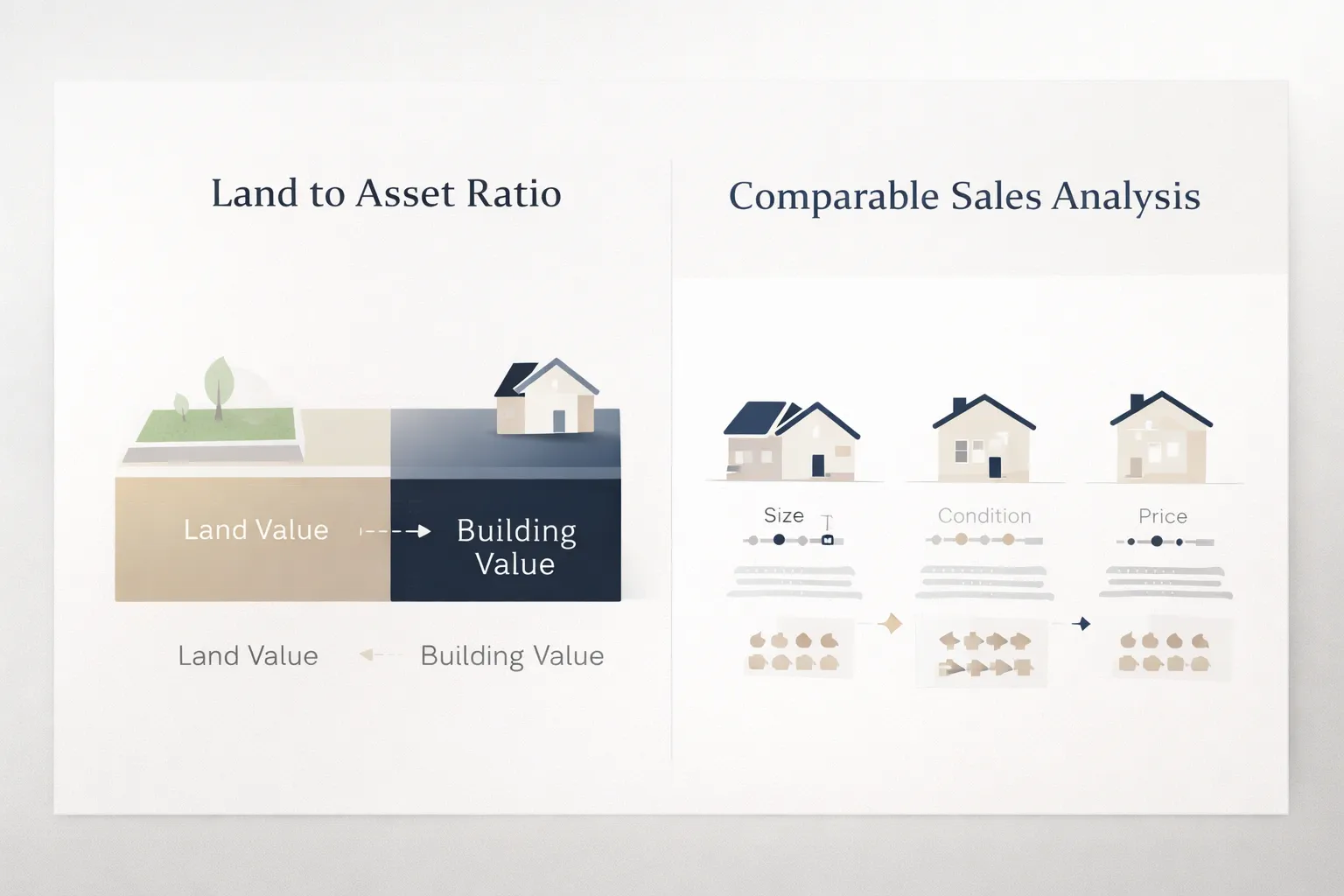
1. Calculate the Land to Asset Ratio
This check determines how much of the property’s value is in the site itself. We need clear insight into the value breakdown.
- How to do it: Find the Site Value on the council rates notice located in the Section 32 vendor statement. Divide that value by the purchase price. This simple calculation provides a powerful perspective on your potential purchase.
- The Goal: A property where at least 70% of the value is in the site is ideal. If it’s lower, it means you’re paying too much for a dwelling that loses value over time.
2. Run a Comparable Sales Analysis
This is maths, not guesswork. It’s how you apply real evidence to your decision while looking at recent Melbourne house prices for context.
- How to do it: Using current pricing information, find three similar properties that have sold in the last 90 days. If the home you like has a smaller block, mentally adjust its price down. If its kitchen is new and the other is old, adjust it slightly. This is fundamental to any sound property purchase in Australia.
- The Process: By making a series of these small, evidence-based adjustments, you build a value that is a calculation, not a guess. Our team, for example, runs every shortlisted asset through a proprietary model that cross-references over 20 information points to remove all emotion from the final valuation. This analytical process is your ultimate defence against a selling agent’s marketing hype.
3. Check the Local Planning Scheme
This is a crucial check on a property’s future potential, especially for future development.
- How to do it: Before buying, go to the local council’s website and search for the address to find its specific zone.
- Why This Matters: Certain zones can severely restrict your ability to extend or add a second storey. Your solicitor should review this as part of the legal checks, but identifying it early prevents you from buying a property you can’t ever improve. A little bit of homework here can save a lot of heartache later.
Ready to Find Your Ideal Property?
Let our Certified Valuer apply this data-driven strategy to find your ideal property from our exclusive network of off-market listings.
Step 3: Follow Infrastructure Catalysts
The most reliable source of property value increases comes from Infrastructure Catalysts. These are major, government-funded projects that serve as a multi-billion-dollar guarantee of future demand and help explain why the housing market is improving in certain areas. An asset must be positioned to benefit from this built-in advantage, a topic we cover in our Melbourne analysis and forecasts.

Use this checklist to vet a location. Is it:
- Near new transport? An 800m radius is key. A report from Infrastructure Victoria confirms that properties near new rail stations, such as those for the Metro Tunnel, can see a value uplift of 8-12% post-announcement.
- In a top school zone? Use the official Find My School website to verify the exact zoning for any address. Being one street outside the zone can erase tens of thousands in value.
- Close to a hospital or university? These major employment hubs guarantee a deep and consistent pool of future tenants, making a purchase a much safer property investment. This is why our framework mandates that every property must be within a short commute of at least one of these non-negotiable hubs.
Don’t base your purchase on project announcements alone because they can be delayed. The market often sees a modest recovery phase before major upticks. Only take a venture seriously once construction has started. You can check the live status of any major project on Victoria’s Big Build portal to see that work is underway.
FAQs about the Current Property Market Rebound
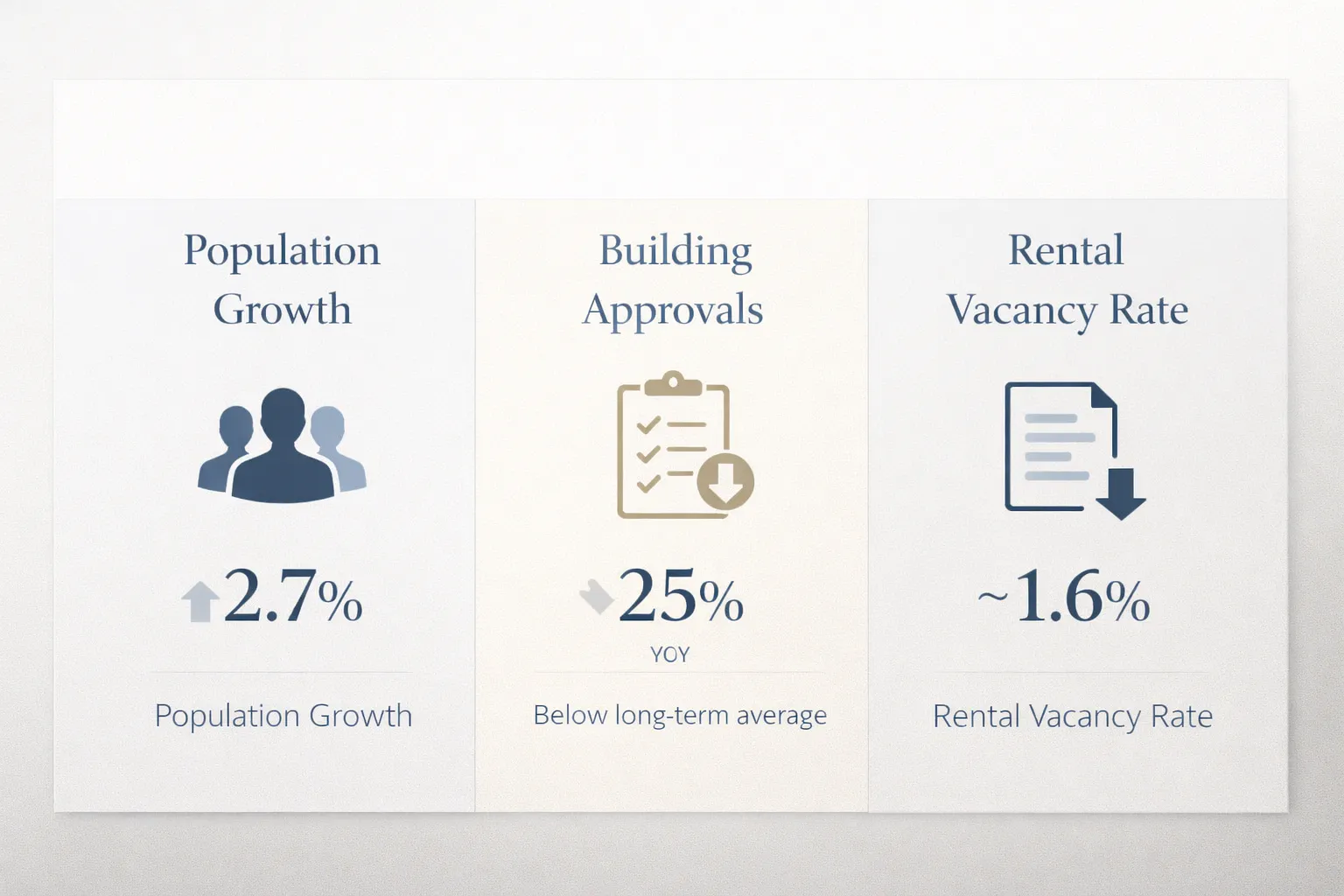
The current climate is influenced by a severe housing shortage and intense rental pressure. Melbourne's population grew by 2.7% in 2023-24, the highest among Australian capitals, yet new building approvals remain well below long-term averages, according to the Australian Bureau of Statistics. This supply-and-demand imbalance creates a floor under prices. Simultaneously, SQM Research data shows Melbourne's rental vacancy rates hovering near a low of 1.6%, pushing rents higher and encouraging more people to enter the market.
This city often follows similar macro trends to the national property market, such as the impact of Reserve Bank interest rate changes. However, its performance can be more localised. For instance, while national figures show broad strength, Cotality's Home Value Index shows Melbourne's recovery is often concentrated in specific landlocked inner and middle-ring areas, where units are outperforming houses due to high demand.
For those buying a home, the housing turnaround means increased competition and the risk of overpaying due to emotion. A clear strategy focused on buying a quality property in scarce, high-value locations is crucial for long-term financial safety. For a property investor, the turnaround presents a significant opportunity for wealth creation. Australian Bureau of Statistics lending indicators show that new investor loan commitments in Victoria have surged, signalling strong confidence in the market's future appreciation.
Accessing off-market properties can be a game-changer. It allows purchasers to sidestep the intense competition often seen at public auctions. With less competition, there's a greater chance of negotiating favourable terms and securing a purchase without the emotional pressure of a bidding war. An expert can also identify hidden flaws in properties that aren't obvious to the untrained eye, protecting you from poor investments.
A Final Insight on Your Next Property
Navigating the property landscape in any major Australian city requires more than just capital. It demands sharp analysis and a robust strategy. The emotional tide of a property auction can easily sweep away even the most disciplined individual. That’s where the cold, hard logic of a certified valuation provides an anchor.
The evidence doesn’t lie. Analysing interest rates, supply pipelines, and demographic shifts allows us to build a predictive model for value, identifying which assets are poised to perform well. This isn’t about finding a dwelling: it’s about making a strategic property acquisition for your future. By focusing on the fundamentals, which include scarcity, verifiable value, and infrastructure, you’re not just buying a piece of Melbourne. You’re securing a cornerstone for your financial future.
Ni Advocacy
Melbourne Buyers Agency
Your Action Plan for High-Value Property Assets
This framework replaces guesswork with a clear plan. Let’s turn market uncertainty into an opportunity and make a smart financial decision.