

Key Takeaways On This Investment Blueprint
A professional framework
is a data-driven plan for finding and securing the right investment asset at the right price. This process removes emotion and guesswork from your real estate journey.
You'll need to choose one primary goal first
This guide covers the capital growth versus rental yield strategy to help you decide on the best path for your portfolio. A clear objective is essential.
Use hard data to filter opportunities
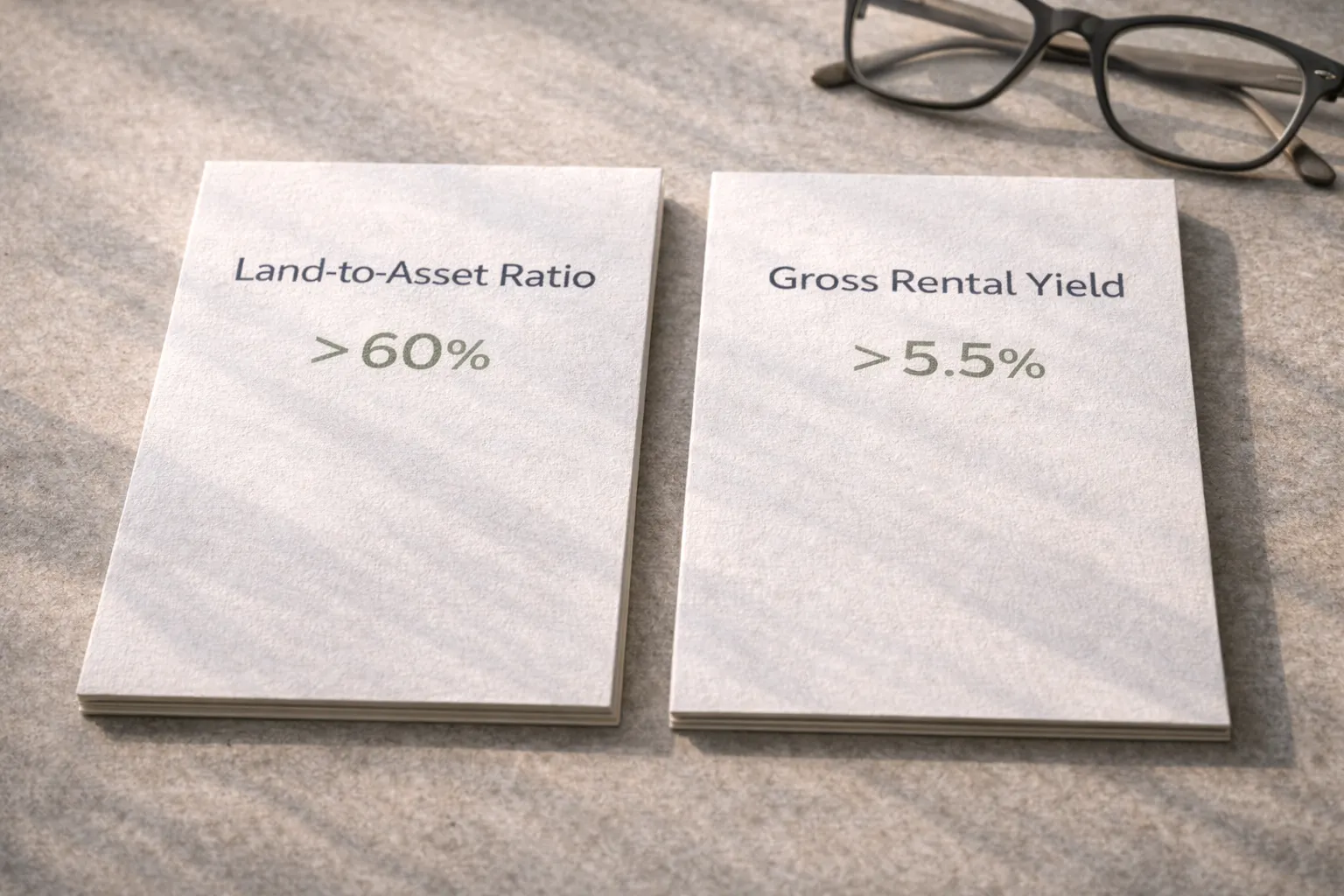
For a growth strategy, the Land-to-Asset Ratio should be above 60%. For an income strategy, the Gross Rental Yield must exceed 5.5%.
The unbreakable rule is to never overpay
An independent, certified valuation establishes an asset's true market value. This gives you a firm walk-away price to protect your capital and initial deposit.
Step 1: Choose Your Primary Goal for Your Investment Property (Growth or Cash Flow?)
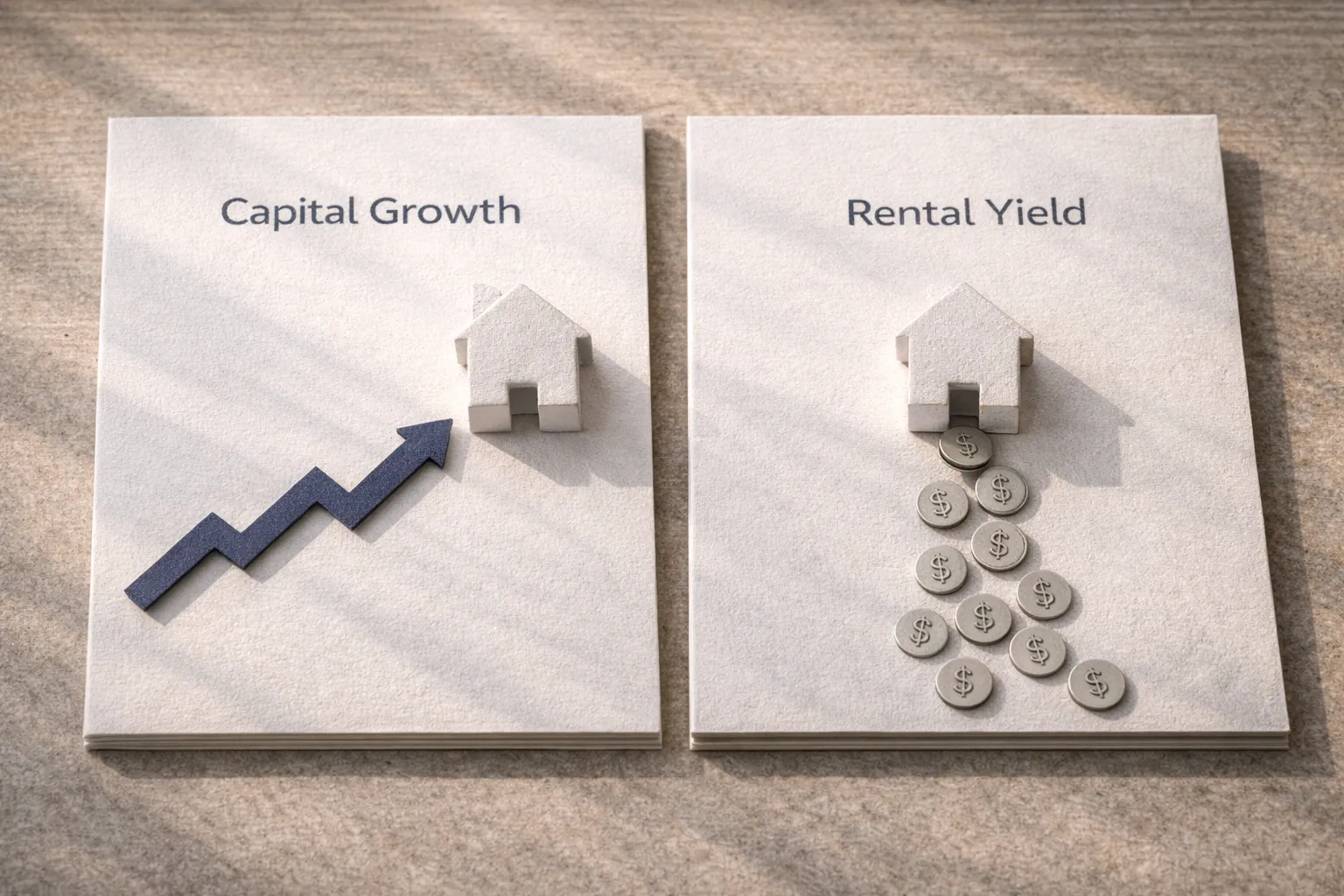
Every successful portfolio is built on a single and clear choice between two missions: growing your net worth for the future or generating extra income today. While a mix sounds ideal, analysis consistently shows that long-term wealth is primarily driven by capital growth rather than rental yield. This is the most crucial decision in any long-term acquisition strategy because it sets the foundation for your journey toward financial freedom.
Why This Matters
An asset that delivers a high rental yield is rarely the same one that’ll experience massive long-term appreciation. Attempting to find a holding that does both perfectly often leads to compromising on both goals. By choosing one mission, you’ll bring clarity and discipline to every other decision in your search. Understanding the balance between cash flow and capital growth is key to making your funds work smarter for you.
Here's a mechanical breakdown of the two strategies:
Metric
Primary Goal
The 'Build My Future' Strategy (Value Appreciation)
To increase the asset’s underlying value over many years. This builds significant long-term wealth and equity through a classic buy-and-keep approach.
The 'Income Now' Strategy (Rental Yield)
To generate immediate, positive income where the rent covers all costs, leaving you with a surplus. This is especially effective in markets with low vacancy rates.
Metric
What It Looks Like
The 'Build My Future' Strategy (Value Appreciation)
The 'Income Now' Strategy (Rental Yield)
Often, a unit, townhouse, or dual-occupancy dwelling in an area with high and consistent rental demand.
Metric
Financial Structure
The 'Build My Future' Strategy (Value Appreciation)
This strategy can utilise a structure in which annual holding costs are offset against your taxable income, potentially reducing your overall tax liability. This is used when expected appreciation outweighs short-term loss.
The 'Income Now' Strategy (Rental Yield)
The investment must be positively geared from the start. This means the total rental income exceeds all expenses, as the surplus income is the entire purpose of the investment.
Turn this Framework into a Personalised Strategy
Let’s apply this professional framework to your unique financial goals and build your investment portfolio with confidence.
Step 2: Use Data to Filter and Invest Wisely
Once you’ve defined your mission, use specific data points to filter the real estate landscape and eliminate unsuitable options. This is how you move from emotional searching to objective analysis. To invest successfully, you have to let the numbers do the talking. You’ll be able to model potential returns using tools like the government’s Moneysmart property investment calculator.
- For a Value Appreciation Strategy, focus on the Land-to-Asset Ratio.
The formula is the Value of the Land divided by the Total Value of the Asset. A valuer will always tell you that land appreciates while buildings depreciate. Therefore, for a growth asset, you’ll want a high ratio that’s ideally greater than 60%. Land value is often driven by scarcity and proximity to amenities or major infrastructure projects, such as those outlined in Victoria’s 30-year strategy. This single metric ensures you’re buying the component that actually grows in value. - For a Rental Yield Strategy, focus on the Gross Rental Yield.
The formula is Annual Rental Income divided by Purchase Price, multiplied by 100. To ensure the holding generates enough income to cover its costs and provide a surplus, you should target a Gross Rental Yield of greater than 5.5%. This number instantly tells you if an asset’s income potential justifies its price tag.
Step 3: A Strategy to Protect Your Gains
An entire investment plan is at risk if you overpay. The biggest disadvantage a buyer faces is information asymmetry, as the selling agent has more information and is legally obligated to obtain the highest price. Your protection is an independent and data-driven valuation. It’s crucial to understand that an agent’s appraisal is a marketing estimate. An Australian Property Institute Certified Practising Valuer’s report is a formal and evidence-based calculation of true market value. This is what we call our Valuer’s Edge.
The Unbreakable Rule: Protect Your Capital
Overpaying is the only mistake in real estate you’ll never be able to undo. A certified valuation guarantees you buy with a financial buffer. This is one of the most important strategies you’ll employ before you even own your property. This initial step can have significant implications for future capital gains and your tax position.
A professional valuation involves several mechanical checks:
- A Direct Comparison Analysis: This involves identifying 3-5 recent, comparable sales and making specific dollar-value adjustments for differences in land size, building condition, and location. Our recent purchases showcase this detailed analysis in practice.
- A Risk Assessment: A valuer will investigate council zoning, planning overlays, and title documents to find any hidden risks. This ensures that restrictions preventing renovation are identified before you proceed.
- A Summation Approach: This calculates the asset’s replacement cost: the cost to rebuild plus land value. A large discrepancy between the asking price and the final sale price is a clear warning sign against overpaying.
This process provides a non-negotiable walk-away price to ensure you make a decision based on data rather than emotion.

Your Action Plan for Confident Investing
A successful real estate investment is the result of a disciplined process and not luck. Here’s the framework summarised into three actionable steps. This is especially useful as a first property investment strategy.
Step 1: Choose Your One Goal
Decide if you're investing for Value Appreciation or Rental Yield. This choice'll guide your entire search and is the cornerstone of all effective real estate investment strategies.
Step 2: Filter with Hard Numbers
Use the key metric for your chosen goal to assess every potential purchase. For Growth, relentlessly hunt for a high Land-to-Asset Ratio. For Yield, instantly dismiss anything below your target Gross Rental Yield.
Step 3: Lock In Your Price with a Valuation
Once you find a suitable asset, protect your capital. An independent valuation provides a final walk-away price to ensure you never pay a dollar more than it's worth.
The Next Step: Professional Management
Once you’ve secured your investment, engage a professional for property management. Just as a licensed buyer’s agent acts solely in your best interest during the purchase, a property manager ensures your asset performs as expected from day one.

Frequently Asked Questions About Investment Strategies
A value appreciation strategy focuses on buying real estate in locations with high long-term growth potential. In contrast, a rental yield strategy prioritises immediate income, with monthly returns exceeding all expenses. Your choice depends on whether your goal is long-term wealth building or immediate income generation.
Positive gearing occurs when rental returns exceed total expenses, resulting in a net profit. Negative gearing is the opposite, where the property's expenses exceed its rental income. This creates a net loss that can often be offset against your taxable income. This is a strategy common in appreciation-focused investments.
Flipping can be profitable, but it carries significant risk for beginners. It requires deep industry knowledge, accurate renovation cost estimates, and efficient project management. For most new investors, a buy-and-hold approach is a lower-risk entry point because it's less dependent on short-term market fluctuations.
Effective value-adding strategies focus on improvements that deliver high returns. For a growth-focused asset, this could mean adding a bedroom or updating a kitchen. For a rental-focused holding, it might involve converting a space into a dual-income setup. The key is to ensure every dollar spent adds more than a dollar to the asset's value or rental yield. For more insights, check our property tips.
A great buyer’s agent combines market access with expert negotiation to secure the right property at the best price while saving you time and stress.
Ni Advocacy
Melbourne Buyers Agency
Ready to Apply This Framework?
If you’re ready to move from theory to action, a professional can provide the strategic advantage you’ll need. Don’t leave your financial future to chance.