

Key Takeaways On Your Blueprint to Buying a Home
Buying property like a pro involves a repeatable seven-step plan that covers finance, strategic search, data-driven valuation, negotiation, and legal due diligence to remove emotion and risk.
Start with certainty by getting a home loan pre-approval so you'll know your exact budget before you begin your house search.
Create a non-negotiable property checklist to act as a filter. This ensures you only spend time on homes that meet your core financial and lifestyle needs.
Set a firm walk-away price when making an offer on a house based on recent comparable sales data to prevent overpaying.
Always complete a professional legal review of the contract and organise building and pest inspections to uncover hidden risks before the deal becomes unconditional.
Step 1: Home Loans, Deposits & Getting Pre-Approval

The first step in any property purchase is getting pre-approval for your loan. Speaking with a reputable mortgage broker can streamline this, or you can use an official tool like the ASIC Moneysmart mortgage calculator for an initial estimate. After a full assessment of your finances, a lender will provide an official document confirming the maximum amount they’ll lend you, which is typically valid for 3-6 months.
Lenders use two key metrics to assess your capacity and the interest rate you’ll be offered:
-
Debt-to-Income Ratio A strict rule where lenders ensure your total debt, including car loans, credit cards, and the new mortgage, doesn't exceed 6-7 times your gross annual income.
-
Loan-to-Value Ratio The loan amount expressed as a percentage of the property's total value.
The Hidden Upfront Costs & Stamp Duty That Kills Deals
A critical part of your upfront costs includes Land Transfer Duty (or Stamp Duty), loan application fees, and building insurance. It’s crucial to be aware that these hidden expenses can add 5-7% to your total property budget. These fees must be paid from your cash reserves and can’t be added to your mortgage. For a hypothetical $3,000,000 property, this can be approximately $165,000 in cash that you must have available on settlement day.
What if I cannot finalise the purchase?
If you don’t have the cash for stamp duty, the contract’s going to fail. This results in you forfeiting your entire 10% deposit to the seller. Securing pre-approval and confirming your cash position first eliminates this risk.
Step 2: Create Your Unshakeable 'Property Filter'
The next step is to build a written brief that acts as a logical filter for your search. Think of it as your non-negotiable rulebook rather than a wishlist. It’s designed to strip emotion from the decision-making process when you’re buying a new home.
Create a simple document with these specific fields to find a home that's going to suit your needs:
-
Financials Your Maximum Purchase Price from pre-approval.
-
Location 2-3 Target Suburbs and any non-negotiable no-go zones, such as a main road.
-
The Land Your minimum required land size and desired orientation, like a north-facing backyard.
-
The House The required property type (e.g. House or Townhouse) and the minimum bed, bath, and car configuration.
-
Deal Breakers Any absolute nos, such as heritage overlays that restrict renovations or the need to be within a specific school catchment area.
Step 3: Access the Off-Market Advantage

The properties advertised online represent only a fraction of what’s for sale. The best homes are often sold off-market through private agent networks. Some market data shows a rise in these exclusive deals, especially in tight markets like Melbourne.
An expert buyer's agent builds direct relationships with selling agents, who present them with properties that match their clients' briefs before a public marketing campaign begins. This gives our clients an exclusive first look at homes the public never sees.
It dramatically cuts the typical 4-6-month search time many buyers face alone. We're not just finding properties. We're kicking goals by getting you in the door first with little to no competition.
Ready to Secure Your Ideal Property with Expert Guidance?
Partner with Ni Advocacy for off-market access, expert data-led negotiation, and the professional support you’ll need to secure your future home. We help buyers across Australia find and win the right property at the right price.
Step 4: Calculate a Property's True Value
One of the biggest anxieties for any buyer is overpaying. This often happens at auctions where emotion overrides logic. To prevent this, you’ve got to value the property based on objective data while focusing on the land component. This data-driven approach is a core principle of our certified valuer’s process and differs significantly from a simple agent appraisal.
The Guiding Principle: The building itself is a depreciating asset while the land beneath it is the appreciating asset. A sound purchase often has a land value that makes up at least 70% of the total price.
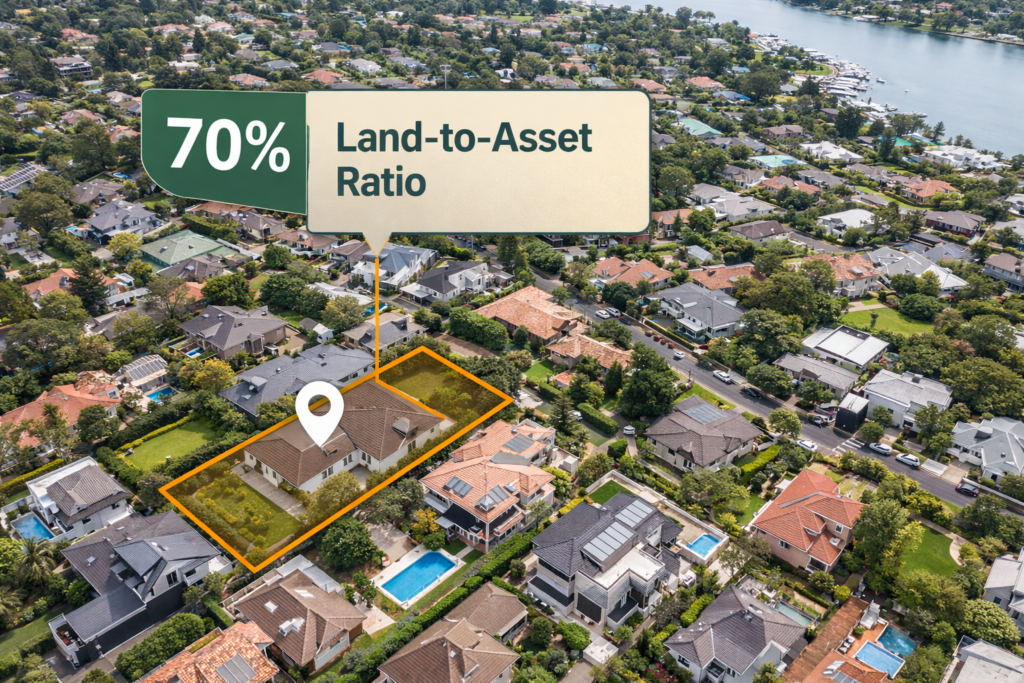
Visit the local council’s website and look up the rates notice for the property. It’ll typically list the Site Value or Unimproved Capital Value. This government-assessed figure serves as a logical anchor, grounding your offer in data rather than emotion.
Step 5: Making an Offer on a House from a Position of Power
Before making an offer or bidding at auction, you’ve got to set a Valuation Ceiling. This is your absolute maximum price calculated using hard data. Especially as reports show auction conditions are softening, having a firm data-backed limit is crucial to avoid overpaying.
Use property data portals to find at least three comparable properties that have sold in the last 90 days. They must closely match the land size, location, and condition of your target property. This analysis will give you an evidence-based price limit that removes panic and emotion from the final decision.
Step 6: Understanding the Contract of Sale and Inspections
An accepted offer doesn’t mean the property’s safe. The deal is conditional upon your legal team, such as a solicitor or conveyancing expert, conducting full due diligence by reviewing the legal documentation. This is your safety net against buying a property with hidden and costly problems.
A solicitor primarily investigates two documents while you’re organising building and pest inspections and finalising your home insurance:
-
The Section 32 or Vendor's Statement: This legal document is checked for risks such as easements (e.g. a shared public drain under your backyard that you can't build on) and restrictive covenants (e.g. a rule that forbids building a second storey).
-
The Strata Report for apartments A financial report card for the building. It's reviewed to identify any upcoming Special Levies, which are large one-off bills for major repairs, such as concrete cancer or lift replacement, that can cost owners over $50,000.
A professional buyer’s agent coordinates these independent legal, building, and pest inspections to ensure the property is structurally and legally sound. Our acquisition process mandates a thorough review of these documents. This protects our clients by ensuring that any major issues give them a legal right to renegotiate or withdraw from the agreement, with their deposit fully refunded.
Step 7: The Final Inspection & Handover
With the handover process explained, the final step before the property’s legally yours is the pre-handover inspection. This takes place 24 hours before you receive the keys, and it’s your last chance to confirm the home is in the exact same condition as when you agreed to buy it.
Your Pre-Handover Checklist:
-
Appliances Systematically turn on every appliance, including the oven, air conditioner, dishwasher, and exhaust fans.
-
Plumbing Run every tap (hot and cold), flush every toilet, and check for leaks under all sinks.
-
Electrical Test every light switch and power point.
-
Fixtures Verify that all items included in the contract, such as blinds, curtains, and pool equipment, are present and in working order.
-
Keys and Remotes Ensure all keys and remotes for doors, windows, and garages are accounted for.
If an issue’s found, you don’t proceed. Your solicitor will be instructed to delay finalising the electronic settlement process until the vendor either rectifies the issue or agrees to cover the cost of repair. Following these steps is crucial to a smooth settlement.
Frequently Asked Questions About Buying a House
Getting pre-approval for a home loan. This sets your firm budget and shows agents you're a serious contender. It's going to give you stronger negotiating power and prevent wasted time on homes outside your approved budget.
If a major structural problem is found, you typically have the right to either withdraw your offer and have your deposit refunded or renegotiate the purchase price to account for repair costs. This is a condition in the contract of sale and provides crucial protection.
The settlement process generally takes between 30 and 90 days after the contract is signed, with 60 days being a common timeframe. This allows for all legal and financial requirements to be completed by both the buyer and seller.
Yes. Once a seller accepts your written offer by signing the contract of sale, it becomes a legally binding agreement. However, the contracts are usually subject to conditions such as finance approval or a satisfactory building inspection, which provides a safety net for the buyer.
Following a clear plan removes guesswork and emotion, giving you the power to make a confident, financially sound decision. This 7-step blueprint, which expands on the 10 key steps every buyer should follow, is your guide to securing the right property at the right price.
Ni Advocacy
Melbourne Buyers Agency
Execute your property plan with confidence
Partner with Ni Advocacy for a data-driven edge in your property search, strong negotiation power, and the support you’ll need to succeed as a homeowner. We help buyers across Australia secure the right property at the right price.